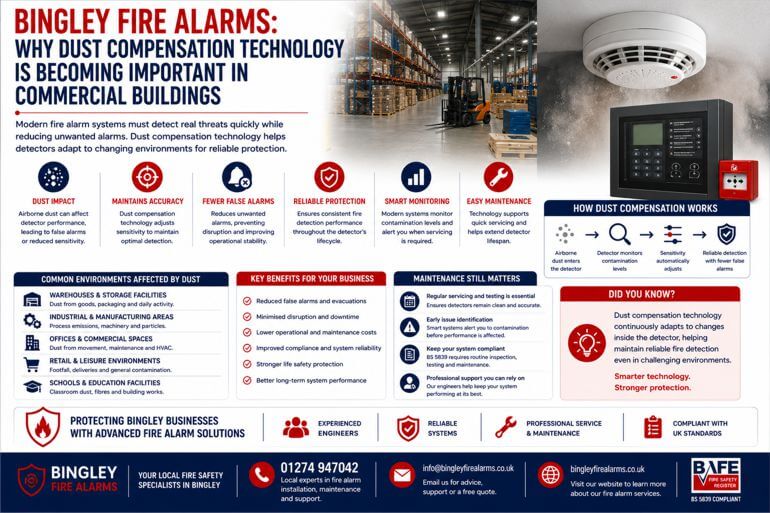
Dust Compensation Technology –
Modern commercial fire alarm systems are expected to provide fast and reliable fire detection while minimising unwanted alarms. One increasingly important feature helping businesses achieve this balance is dust compensation technology.
Commercial environments across Bingley often contain airborne particles caused by:
- warehouses
- manufacturing
- offices
- retail activity
- building maintenance
- and day-to-day operational movement
Over time, these airborne contaminants can gradually affect smoke detector performance if systems are not designed and maintained correctly.
Dust compensation technology helps modern fire alarm systems adapt to changing environmental conditions while maintaining reliable detection sensitivity.
Why Dust Affects Fire Alarm Detectors
Smoke detectors operate by monitoring changes inside their sensing chambers.
As dust and airborne contamination accumulate over time, detectors may become:
- overly sensitive
- less responsive
- or more prone to unwanted alarms
This can create operational disruption for businesses if left unmanaged.
Commercial Premises Often Generate Airborne Particles
Many commercial environments naturally produce:
- dust
- fibres
- packaging debris
- vapour
- and environmental contamination
Examples include:
- warehouses
- workshops
- offices
- schools
- retail premises
- and industrial facilities
Even relatively clean office buildings can gradually accumulate airborne contaminants.
Unwanted Fire Alarms Can Be Highly Disruptive
False or unwanted alarms may lead to:
- unnecessary evacuations
- production downtime
- staff disruption
- customer inconvenience
- and emergency service attendance
Businesses increasingly seek fire alarm solutions that balance:
- reliable life safety
- and operational stability
Dust Compensation Helps Maintain Detector Accuracy
Modern detectors using dust compensation technology can monitor contamination levels and automatically adjust their sensitivity within safe operating parameters.
This helps maintain:
- stable performance
- reliable detection
- and reduced nuisance alarm risk
over the lifespan of the detector.
Detector Maintenance Remains Essential
Although compensation technology improves system performance, detectors still require:
- routine servicing
- testing
- inspection
- and cleaning
Professional maintenance remains critical for:
- compliance
- reliability
- and long-term operational performance
Warehouses And Industrial Premises Benefit Strongly
Commercial buildings with:
- forklift movement
- pallet storage
- manufacturing activity
- or packaging operations
often experience elevated airborne dust levels.
Compensation technology can help systems remain more stable within these challenging environments.
Construction And Refurbishment Work Can Affect Systems
Building works frequently generate:
- plaster dust
- drilling debris
- ceiling contamination
- and airborne particles
Temporary environmental changes can affect fire alarm detectors if systems are not properly managed during refurbishment projects.
Smart Fire Alarm Systems Provide Better Monitoring
Modern commercial fire alarm systems increasingly provide:
- contamination monitoring
- detector condition alerts
- maintenance warnings
- and system diagnostics
This allows maintenance teams to identify developing issues earlier.
Different Detector Types Suit Different Environments
Some commercial environments may require:
- optical detectors
- heat detectors
- multi-sensor technology
- or specialist detection methods
depending on:
- environmental conditions
- occupancy
- and operational activity
Professional system design helps match detector technology to the environment.
Cleaner Detection Improves Long-Term Reliability
Maintaining detector performance helps support:
- consistent fire protection
- reduced operational disruption
- and improved building safety management
particularly within busy commercial premises.
Modern Fire Alarm Systems Must Handle Real-World Conditions
For businesses in Bingley, fire alarm systems increasingly need to operate reliably within demanding and constantly changing environments.
Dust compensation technology helps provide:
- improved detector stability
- reduced nuisance alarms
- stronger long-term reliability
- and more effective commercial fire detection
As modern commercial buildings become more operationally complex, smarter fire detection technology is becoming an increasingly important part of fire alarm system design.
Frequently Asked Questions
What is dust compensation in fire alarms?
It allows detectors to adjust sensitivity levels as contamination gradually builds inside the sensing chamber.
Why is dust compensation useful?
It helps reduce unwanted alarms while maintaining reliable fire detection performance.
Do detectors with dust compensation still require servicing?
Yes. Routine maintenance and cleaning remain essential for compliance and long-term reliability.