Fire Alarm System Upgrades –
Many commercial buildings across Bingley are still operating fire alarm systems that were installed 10, 15 or even 20 years ago. While these systems may continue to function, ageing fire alarm technology can create reliability concerns, increase maintenance costs and make compliance more difficult.
For business owners, facilities managers and property managers, understanding when a fire alarm system has reached the point where an upgrade becomes more practical than ongoing repairs is essential.
Modern fire alarm technology offers significant advantages over older systems, helping businesses improve safety, reduce downtime and maintain compliance with current fire safety standards.
Signs Your Fire Alarm System Is Becoming Obsolete
A fire alarm system does not necessarily stop working overnight. More commonly, deterioration happens gradually.
Common warning signs include:
• Increasing false alarms
• Difficulty sourcing replacement parts
• Frequent fault conditions
• Repeated engineer callouts
• Outdated control panels
• Poor detector performance
• Limited expansion capability
Many older systems rely on components that manufacturers no longer support. This can make even minor repairs expensive and time-consuming.
For businesses operating in Bingley’s industrial estates, office developments and commercial premises, this can present a significant operational risk.
The Cost of Continually Repairing Old Systems
Many businesses continue repairing ageing fire alarm systems because replacement appears expensive.
However, repeated maintenance visits, emergency repairs and replacement components often create a hidden cost burden.
If your fire alarm contractor regularly recommends repairs, it may be worth reviewing the total maintenance spend over the previous few years.
In many cases, investing in a new system can provide:
• Lower maintenance costs
• Improved reliability
• Reduced false alarms
• Better building coverage
• Easier compliance management
A modern system often pays for itself through reduced disruption and lower service costs over its lifespan.
Addressable Technology Delivers Greater Control
Many older commercial fire alarm systems use conventional technology.
Whilst effective in smaller buildings, conventional systems provide limited information during an alarm activation.
Modern addressable fire alarm systems identify the precise detector, call point or device that has activated.
This provides several advantages:
• Faster incident investigation
• Reduced downtime
• Improved evacuation management
• Easier fault diagnosis
• Enhanced maintenance reporting
For larger commercial premises in Bingley, addressable systems have become the preferred solution due to the level of control and visibility they provide.
Supporting Building Expansion
Many businesses evolve over time.
Offices expand, warehouses increase capacity and commercial units undergo refurbishment.
Older fire alarm systems often struggle to accommodate these changes.
Capacity limitations can result in:
• Detector shortages
• Additional control panels
• Complex wiring modifications
• Increased maintenance difficulties
A system upgrade allows future expansion to be considered from the outset, ensuring the fire alarm system continues to support business growth.
Integration With Modern Building Systems
Today’s commercial buildings often contain multiple safety and security systems.
Modern fire alarm systems can integrate with:
• Access control systems
• Fire door release mechanisms
• Smoke ventilation systems
• Disabled refuge systems
• Lift controls
• Remote monitoring centres
Older fire alarm systems frequently lack these capabilities or require costly adaptations.
An upgrade provides an opportunity to create a fully integrated life safety solution that improves both safety and operational efficiency.
Reducing False Alarms
False alarms remain one of the biggest frustrations for commercial premises.
Every unnecessary evacuation can affect productivity, disrupt customers and create complacency amongst staff.
Modern fire alarm systems incorporate improved detector technology, enhanced sensitivity settings and sophisticated programming options.
These features help minimise unwanted activations whilst maintaining high levels of fire detection performance.
For businesses with large workforces or customer-facing operations, reducing false alarms can deliver significant benefits.
Compliance and Documentation
Fire safety legislation places responsibilities on responsible persons to ensure fire alarm systems remain suitable for the building they protect.
An ageing fire alarm system may no longer reflect:
• Current building layouts
• Occupancy levels
• Fire risks
• Evacuation procedures
• Building use
A professionally designed upgrade ensures the system supports the building’s current fire strategy and complies with applicable standards.
It also provides updated documentation, commissioning records and maintenance schedules that can assist with audits, inspections and insurance requirements.
Planning a Fire Alarm Upgrade
The best fire alarm upgrades begin with a detailed survey.
This allows engineers to assess:
• Existing infrastructure
• Building layout
• Occupancy requirements
• Expansion plans
• Compliance considerations
A phased upgrade can often be implemented to minimise disruption whilst ensuring continuous fire protection throughout the project.
Commercial Fire Alarm Upgrades in Bingley
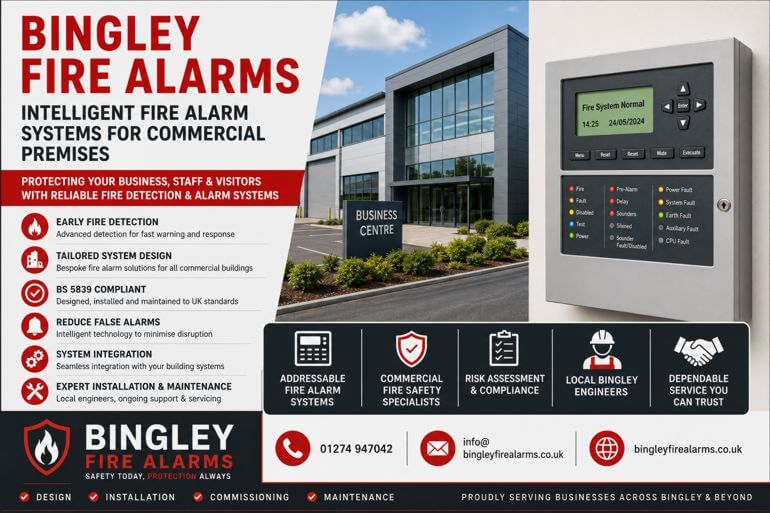
At Bingley Fire Alarms, we help businesses modernise ageing fire alarm systems with reliable, fully compliant solutions tailored to their premises.
Whether your current system is becoming unreliable, difficult to maintain or no longer suitable for your building, our experienced engineers can provide expert advice on the most cost-effective upgrade options.
From offices and warehouses to schools, retail premises and industrial facilities, we deliver commercial fire alarm systems designed to provide long-term reliability, improved safety and complete peace of mind.