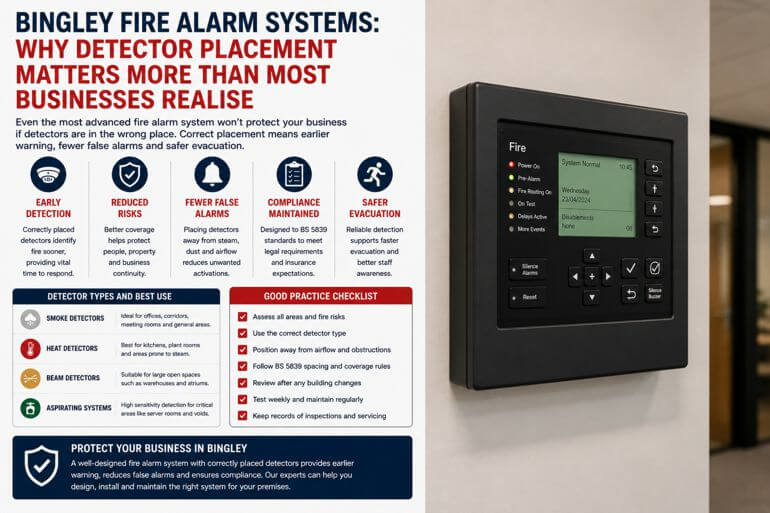
Fire Alarm Detector Placement –
For many commercial premises in Bingley, fire alarm systems are viewed primarily as a legal requirement — something that must be installed to satisfy compliance obligations. However, the effectiveness of any fire alarm system depends heavily on one critical factor that is often overlooked: detector placement.
Even the most advanced fire alarm panel will struggle to provide effective protection if detectors are positioned incorrectly. Poor placement can delay fire detection, increase false alarms and create dangerous blind spots within the building.
Fire Detection Is About Early Warning
The primary role of a commercial fire alarm system is to provide the earliest possible warning of fire so that occupants can evacuate safely.
That means detectors must identify:
- smoke
- heat
- or combustion products
before fire spreads significantly.
In Bingley commercial premises, delayed detection can lead to:
- increased evacuation risk
- greater property damage
- operational downtime
- and higher recovery costs
Different Areas Require Different Detection Methods
Not every area within a building presents the same fire risks.
For example:
- offices may require smoke detection
- kitchens often require heat detectors
- plant rooms may require specialist detection
- warehouses may need beam or aspirating systems
Installing the wrong detector type in the wrong area often leads to repeated false alarms or poor detection performance.
Ceiling Layouts Affect Detector Performance
One of the most misunderstood aspects of fire alarm design is how ceiling structures influence smoke movement.
Factors affecting detector placement include:
- ceiling height
- beams and voids
- ventilation systems
- lighting structures
- mezzanine floors
- and air conditioning airflow
In many Bingley commercial buildings, particularly converted mills or older premises, complex ceiling layouts can significantly affect detector coverage.
Airflow Can Delay Smoke Detection
Air conditioning and extraction systems can redirect smoke away from detectors, slowing activation times.
This is particularly important in:
- offices
- server rooms
- hospitality venues
- and retail environments
Correct detector positioning helps compensate for these airflow patterns and improves reliability.
False Alarms Often Come Down to Poor Placement
Many businesses assume false alarms are caused by faulty equipment when the real issue is detector location.
Common causes include detectors installed too close to:
- kitchens
- steam sources
- loading doors
- dusty environments
- or ventilation outlets
Repeated false alarms create operational disruption and can eventually lead to complacency among staff.
Compliance Depends on Proper Design
Commercial fire alarm systems should be designed in accordance with relevant British Standards, including BS 5839.
This includes:
- detector spacing
- positioning
- coverage calculations
- and risk category requirements
Poorly designed systems may technically operate but still fail to provide adequate protection or compliance.
Different Fire Alarm Categories Require Different Coverage
Commercial premises in Bingley may require different system categories depending on risk profile and building use.
Examples include:
- Category L systems for life protection
- Category P systems for property protection
- or combined approaches
The required category directly affects:
- where detectors are installed
- how much coverage is needed
- and which areas are prioritised
Building Changes Can Affect Existing Detection
Many businesses modify layouts over time without reviewing the fire alarm system.
Examples include:
- new partition walls
- suspended ceilings
- additional storage
- office reconfiguration
- or changes in room use
These changes can create coverage gaps or reduce detector effectiveness.
Maintenance and Testing Remain Essential
Even perfectly positioned detectors require ongoing maintenance.
Businesses should ensure:
- regular fire alarm servicing
- weekly testing procedures
- detector cleaning
- battery and power supply checks
- and accurate maintenance records
Dust contamination and environmental conditions can affect detector sensitivity over time.
Staff Awareness Supports Faster Evacuation
Effective fire detection only works if occupants respond correctly.
Staff should understand:
- alarm tones and procedures
- evacuation routes
- assembly points
- and reporting processes
Clear evacuation planning works alongside effective detection to improve overall fire safety.
Fire Alarm Design Should Never Be Generic
No two commercial buildings are identical. Effective detector placement depends on:
- building structure
- occupancy type
- operational activity
- and fire risk profile
For businesses in Bingley, properly designed fire alarm systems provide earlier warning, fewer false alarms and more reliable protection. Correct detector placement is not simply a technical detail — it is one of the most important factors in the effectiveness of the entire system.
Frequently Asked Questions
Why do commercial fire alarms false alarm?
False alarms are often caused by poor detector placement near steam, dust, airflow or cooking sources rather than faulty equipment.
Can office layout changes affect detector coverage?
Yes. Partition walls, ceiling changes and new layouts can all reduce detector effectiveness and should trigger system reviews.
How often should commercial fire alarms be serviced?
Commercial fire alarm systems should normally be professionally serviced at regular intervals in line with BS 5839 recommendations.